Ivan Thorpe Branson
 Ivan Branson, last of the five children of Alvin Thorpe Branson
and Mary Eliza Simmons, was born 9 November 1901 in Mariposa, Mariposa County, CA in a home the family
called the Gann House. Alvin and Mary Branson frequently rented this house on an off-and-on basis during
the period from the mid-1890s to 1910 or so. Their landlord was probably Elias Newton Gann, a rancher
whose main residence was in the Whiterock precinct of the county. If not him, then the homeowner was one
of Elias’s sons. Ivan came into the world at the end of an exhausting labor lasting two days. Apparently
he was a huge baby. His sister Maude, who helped with the birth, wrote in a reminiscence in 1961 that he
weighed thirteen pounds. This seems likely to have been an exaggeration, but he was certainly large
enough that his mother hemorrhaged and required an operation to deal with the trauma, leaving her
recuperating for fifteen months. Grandmother Martha Jane Ousley Branson was on hand, the occasion being
perhaps the last of dozens of times in her life when she served as a midwife. Inasmuch as Martha was
seventy-three years old, the ordeal proved to be nearly as much as she could handle.
For all of that, Ivan arrived healthy. He was to be called Donald, a name chosen by Maude, who had
been awarded the right to the naming because the baby’s arrival meant Alvin and Mary did not have the
money to spare to send Maude off to business school, something Maude had greatly desired as an
opportunity to escape Mariposa County and make something of herself out in the big, wide world.
However, Grandma Martha declared the baby must be called something else because Donald was -- according
to her -- an old Scots name, and she hated it. Alvin agreed in order to please his mother. Mary
believed she had no choice but to comply, but made it known that once she chose an alternate, that
would be that. Mary selected Ivan. Martha hated that even more because it was “too Russian,” but she
was not allowed to interfere again. She later commented that she wished she had kept her mouth shut.
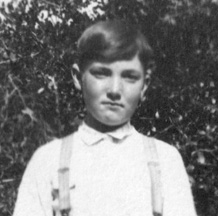 Ivan’s childhood was spend in various parts of Mariposa County. If
things had gone better, he would have had just one home, the large cabin Alvin had built next to his
“Last Chance” claim along the Merced River at Exchequer, just east of the Merced County line and not far
from Alvin’s birthplace of Phillips Flat, where Ivan’s grandfather John Sevier Branson and his partners
had successfully dug and sluiced for placer gold from the late 1850s to the late 1860s. Alvin had deduced
that the course of the river had changed thousands of years earlier, and the prehistoric gravel
bed -- which in theory should have contained ample amounts of gold dust and flakes deposited in those
ancient times -- had not been worked by Gold Rush-era miners. Over many seasons beginning in 1897 Alvin
dug a trench and then a tunnel into that layer. Some gold did turn up -- Ivan himself found four hundred
dollars’ worth over a four-day span as a boy -- but the hoped-for bonanza did not materialize. Each year
Alvin’s efforts were interrupted for a few weeks or months while he labored away at whatever sort of
temporary jobs he could find, so as to have the money needed to keep the family fed and also cover the cost
of the annual filing fee necessary to retain the rights to Last Chance, that fee being the non-trivial sum
of one hundred dollars. This lifestyle was not as secure as others he might have adopted. Odd jobs were
becoming fewer and fewer in Mariposa County in those days. Sometimes Alvin worked at Mount Ophir near the
town of Mariposa. Sometimes
he went back to his 1880s stomping grounds at Quartzburg. Occasionally he worked in Hornitos. He was a
miner, a blacksmith, a carpenter. Ivan therefore did not get to know what it was like to have a steady and
settled home life, because as Alvin moved from one employment locale to another, the household shifted, too.
When Alvin was at Mt. Ophir, spending his nights in the miners’ barracks, Mary Eliza and the kids resided at
Gann House in Mariposa, about seven miles away. The proximity meant it was practical for Mary to take
clean laundry and other necessities of life to Alvin on weekends. While at Quartzburg, the family often
stayed at “Grasshopper Ranch,” the long-time home of John and Martha Branson, or (especially after the
death of John and Martha) or upon the ranch of Alvin’s brother Joseph. (In some ways this was the same
thing, because Joe Branson had purchased the deed to his parents’ land back in 1897, adding the acreage
to his own.) Ivan grew up with a broad familiarity
of the region. His affection for Mariposa County, and particularly for its history, remained steady all
his life, even though he would never live within its boundaries as an adult.
Ivan would develop into an educated and, one could say, scholarly individual. This is a minor miracle
given the inconstancies of his upbringing and the attitude among the sons of pioneers that a little bit
of readin’, ritin’, and ’rithmetic was all a boy needed. Some of his contemporaries -- including his
brother Jim -- never graduated eighth grade. However, Ivan did get a certain amount of primary-grade
schooling in Mariposa and at Quartzburg District School near Grasshopper Ranch (in a newer building
than the one in which his mother and father had known as pupils). When he was nine years old, his elder
sister Florence became his teacher. By then the family was residing mostly at Exchequer. This isolated
speck of the gold country, once home to thousands of Gold Rush miners but which by 1910 had become quite
empty, possessed no school until four local families, including the Bransons, pooled their resources, put
up a simple one-room structure, and contributed enough cash to pay an instructor’s salary. Florence did
not have a teaching credential. She had not yet completed her training at “normal school” and technically
did not qualify for the job. Nevertheless, the kids needed a teacher, so Florence taught two terms, Fall
1910 and Spring 1911. Both sessions were abbreviated.
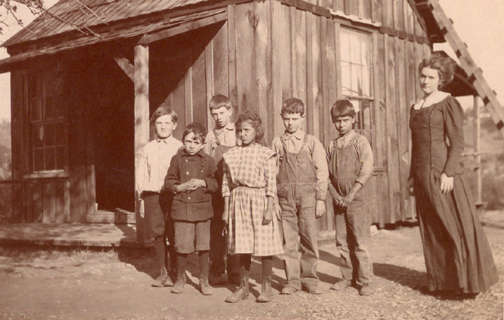
The students of Exchequer School 1910/1911 term in front of their building. The boy at the far
left is Ivan Branson. The young woman on the far right is his sister and teacher, Florence
Branson.
The county arranged a more formal school at Exchequer for the following academic year, and a qualified
teacher was hired. The latter was Virginia Monotti, who would later serve on the Mariposa County Board of
Education. Ivan is said to have had quite a crush on her, and photos of the two of them from 1912 or so
still exist within his collection of memorabilia. At thirteen, Ivan was Exchequer School’s second graduate,
preceded a year earlier by Horace Meyer. (Horace Meyer would later become
a preeminent cattle rancher of the Hornitos area. Along with other property, Meyer would eventually
acquire a half-interest in the 1300-acre cattle ranch Joseph Branson had built up over his lifetime.)
By now it was 1914, and Ivan was in need of more serious education. And by now, Alvin -- who had in the
previous few years defended his claim at gunpoint -- was prepared to concede it was foolish to pin the
family’s hopes on the promise of Last Chance. In June, the household -- by now reduced to Alvin,
Mary, Ivan, and Ivan’s brother Walter, the others having spread their wings -- was reestablished in
Stockton, a town which possessed a high school. About half a year later, finding their initial mortgage
loan terms to contain a nasty balloon payment, Alvin and Mary bought a different house at 420 Monterey
Avenue (with traditional mortgage terms). This property
remained in the family over many decades, passing to Ivan’s brother Walter after Alvin and Mary were
dead, then to Maude, then to Maude’s daughter Doris, and then was purchased by Ivan from Doris in the
1970s.
Ivan arrived in Stockton distinctly undersized for his age, but soon a growth spurt granted him a dose
of the strapping body type characteristic of the Branson men of Mariposa County. Being an enterprising
young man and knowing from his father’s life experience how hard a person might have to work to scrape
together a few nickels, he began taking jobs at once. He convinced his father it was worth investing in
a bicycle, and with it Ivan began delivering meat from Fulton Meat Market to customers throughout
town. Other jobs followed, from newspaper delivery boy to cigar-maker’s apprentice to low-level jobs
at Clark Hotel and the Hotel Stockton, such as bellhop, hat check clerk, and elevator attendant. Then,
setting the stage for greater things, he began working full eight-hour shifts from 4pm to midnight as a
messenger for the local Western Union office.
 At Western Union, Ivan quickly saw the potential in
a telegraphy career. At this point in the Twentieth Century, telegraphy was a vital part of information
flow. Not only did people depend upon telegrams to reach the many individuals -- and even the many
geographical regions -- that were not yet served by the telephone industry, but messages by wire were
the means to conduct such essential business as long-distance monetary transfers, newspaper wire dispatches,
and law enforcement. The role of the telegrapher, to listen to and decipher the transmissions, was
vital. Consequently, the pay was superior to many other wage-earning positions. Ivan realized he might
earn some serious money if he developed the right skills -- a solid command of English vocabulary
and grammar, superior typing ability, an ability to concentrate, and most specific, an understanding of
Morse Code. He was already taking care of another aspect of winning one of the coveted jobs by chatting
up his employer and supervisors, impressing them with his earnestness and his willingness to acquire the
necessary learning on his own time.
Becoming a telegrapher was not a trivial goal for someone of Ivan’s roughshod, foothills background. He
was unaccustomed to regular attendance at school, and his life was very full for someone of his tender
years, allowing only a limited number of hours in a week during which to do all his coursework. He did
well in English, typing, bookkeeping, and woodwork, but found algebra and other academically essential
subjects a huge chore. At first he had only a pipe-dream level hope of rising up the ranks at Western
Union. For the time being, he remained only a messenger boy.
His grades were not in keeping with his ambitions. They were in fact so bad that his father, who had
gone to work in May, 1917 for Standard Oil at the booming refinery complex in Richmond, Contra Costa
County, CA, leaving Ivan in the care of his siblings Maude and Walter, convinced Ivan to come get a
summer job at the same facility. Alvin and Mary were temporarily based in Berkeley/Oakland, Alameda
County, CA so that they could be near their granddaughter Melba Branson, whose mother had suddenly died
of an abortion gone sour, and so that they could be near their son Jim, who was at that point an inmate
in San Quentin Penitentiary. Getting Ivan into a gainful employment situation no doubt struck Alvin
and Mary as one of the few positive things they could squeeze out of their sojourn, given the stressful
circumstances that had forced them to abandon Stockton. Ivan took his dad’s advice. However, he found
the job at the refinery very much not to his liking -- and Standard Oil found him very much not
to their liking, resulting in a career lasting three days. But things ended well. The area was
replete with earning opportunities and the economy was robust thanks to busy ports and the great
shipbuilding efforts going on as a consequence of World War I. Ivan did spend the summer there after
all. He became a streetcar conductor, working ten-hour shifts at 28 cents an hour. Sometimes he was off
for as little as twenty minutes before working a second shift. When he could,
he went down to the local Western Union office to get to know the staff there and to hone his
chosen-career skills.
When the next school term began, he returned to Stockton to give his educational efforts one last push.
(His parents soon came back as well, Melba’s care situation having become stablized.) In later years he
would characterize his teachers as his saviors, coming to his rescue and completing his
transformation from poor country bumpkin into a person sophisticated enough to craft a secure place in a
rapidly changing America. Meanwhile prospects at Western Union became more promising. He rose from
messenger to delivery clerk -- the person who dispatched messengers. And then, in the spring of 1919, the
seventeen-year-old was presented with an opportunity he could not pass up. A discovery of a large deposit of
silver ore had spurred boomtown conditions in the area of Tonopah, NV, a place that lacked telephone
service. The Western Union office at Tonopah urgently needed more staff to handle the increased business.
Thanks to the recommendation of the Stockton-office Western Union manager, Ivan was soon on his way across
the Sierra Nevada range to take a job as a junior -- but full-fledged -- telegrapher.
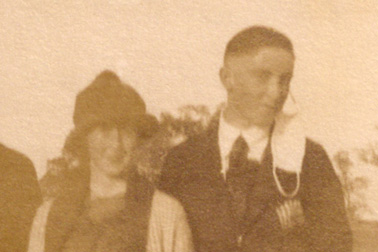 By November of that year, the Nevada miners realized that
the deposit they hoped would rival the Comstock
Lode was in fact modest in potential. Soon Western Union had no need of Ivan at Tonopah. But by
then he had proved himself to be a good telegrapher as well as a person who could interact well with
the public, and so he was offered a position at one of the company offices in downtown San Francisco.
Ivan accepted at once. He saw little point in returning to Stockton, particularly now that Helen
Farnsworth, the girl he
had been sweet on over the previous few years, had found another suitor. (At right is a snapshot of
Ivan and Helen in the fall of 1918. This was taken during the great flu epidemic. Note the face mask
dangling on Ivan’s shoulder.) Within a year or so of settling
in San Francisco, he changed jobs, becoming manager of the Postal branch at California and Sansome
Streets, followed by a few months at the Oakland branch. Though he was still chiefly a telegrapher and
was still earning about the same amount of money as at Western Union, the change in employers opened up
better opportunities for advancement.
At the Oakland job site, the pay clerk was named Marion Christian. She had been born in Denmark 30
November 1895. Her name had originally been Maren Christensen, but it had been Americanized when she
had come to the United States in 1914. Ivan and Marion hit it off and soon one thing led to another. They
were married in San Rafael, Marin County, CA 28 January 1922. The ceremony was small and quiet because
in those days, a young man needed parental permission to wed before the age of twenty-one, and Ivan
didn’t want to risk letting his parents object to him marrying a “foreigner” six years senior to him. He
lied about his age and the deed was done. Given the ups-and-downs of the marriages of Ivan’s siblings,
Alvin and Mary Branson had little to complain about in their youngest child’s choice of mate and the
steadfastness of the union.
One of the big employers of telegraphers in the 1920s was Associated Press. Ivan worked his way onto
their payroll by filling in for vacationing regular staff. The people he replaced worked in different
parts of California, from San Jose to Modesto to San Luis Obispo to Stockton, which was less than ideal,
but the inconvenience was forgotten when, as hoped, Ivan was offered a permanent and full-time position.
Unfortunately, the position was in Yakima, WA, where the climate did not suit Ivan at all. Luckily
he only had to endure one inland Pacific Northwest winter. Another A.P. position opened up in downtown
San Francisco. He and Marion found a place to live in Oakland, an easy ferry commute to and from his
workplace.
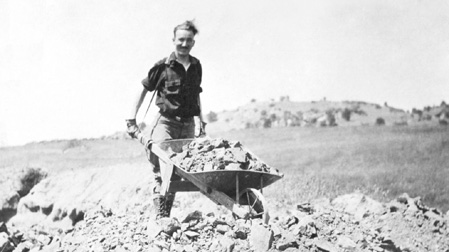
Ivan trying his luck at old diggings in the Hornitos area some time in the 1920s or 1930s.
Throughout his life he would take mining holidays back to the old stomping grounds or in other parts of
the Mother Lode. The huge fireplace of the house he built in the 1960s was replete with rocks he
collected during these expeditions, some taken from the sites where Branson families had built their
homes.
Ivan enjoyed the work with Associated Press. Aside from the regular salary, he could fill the time and
earn some supplemental income by composing freelance “filler” articles for syndication. His
contributions included humorous anecdotes and short pieces of historical and topical interest about the
Mother Lode region. He also wrote about the telegraphy profession -- an example being his piece “J-E,”
an Exclamation, the Wires Carried., which filled page two of the 19 October 1924 edition of the
Oakland Tribune Magazine. Once he got the hand of writing articles, he expanded into other markets
such as Motorland, the magazine of the American Automobile Association. Photos still exist in his
memorabilia that were used for these submissions. The subjects include a man who made and sold his own
gasoline in Half Moon Bay, another man who operated a horse-drawn handsome cab at Golden Gate Park, and
tourists (or Ivan himself) enjoying the sights of Yosemite Valley. Ivan stayed with A.P. for a number of
years during the mid-1920s, but he was always
conscious of bettering his career and pay situation. The dream job for telegraphers at that point was
working for a stock brokerage house. The work required only the highest grade signal men, and the level
of activity was so intense an operator seldom worked more than ninety minutes at a stretch before being
relieved. Ivan began to obtain part-time shifts with the A. W. Coote Company, and when that company
went out of business, he succeeded in getting on at E.F. Hutton. The money began to roll in.
It was, however, not a secure era for telegraphers. Teletypes were replacing human Morse decoders. Young
men were now increasingly unable to enter the industry as Ivan had, and veterans were beginning to
struggle to keep existing jobs. As president of the local union, Ivan had to call strikes on three
occasions to keep his colleagues employed, a tactic which only succeeded because the economy was
robust. Then came October, 1929 and the big stock market crash.
Ivan was laid off at once. He knew his union background would make it impossible to find a telegraphy
position elsewhere. His answer was to agree to step in as a partner and owner of a sandwich delivery business
that had recently been started by a man and wife, the Vincellios, whom Ivan knew through E.F. Hutton
connections. The other founding partner of the business had just run off with the cash box, leaving the
Vincellios a note apologizing but explaining that his wife was catching up with him, so the small sum Ivan
and Marion had in their savings account represented a much-needed infusion of funds to keep the fledgling
operation going. Ivan and Marion and the Vincellios called their new joint venture Morning Glory
Sandwiches and Catering. For a brief time, the sandwiches were made right in the downtown San Francisco
apartment where Ivan and Marion were living at the time. Soon the operation grew and a staff of four
partners was not sufficient to keep up with demand. An hourly-wage employee was hired and a proper
storefront was leased.
Soon a large new large-scale customer presented itself -- the Pacific Fleet, whose ships were soon due
in port. The Vincellios didn’t want to contribute the capital necessary to gear up to make so
many sandwiches for so many sailors. They saw Morning Glory as a stopgap venture until the stock market
improved. Ivan was willing to invest in its longterm future. Soon he and Marion went separate ways
from the other couple, dividing their existing customers and wishing each other well. It was one of the
best decisions Ivan ever made. Morning Glory prospered. In the next few years the crew expanded to a
dozen and more. When Prohibition was repealed, demand for sandwiches boomed because the new laws regarding
serving of liquor in public places required that food be served with it. During World War II, the military
side of
the customer base required up to 65,000 sandwiches a day. By its height in the early 1960s, just before
Ivan began to withdraw from and sell the business, the number of employees on the Morning Glory payroll
exceeded three thousand. (Among the employees over the years were other members of the Branson
clan -- Ivan’s niece Melba Branson and her husband, and his cousin Henry Branson’s daughter Betty and her
husband.)
Naturally the business soon outgrew its original modest quarters. Delicatessen operations were shifted away
from downtown to 1329 Fulton Street -- the very heart of San Francisco, geographically speaking. Ivan and
Marion no longer had to live in the same building where they worked. Instead they resided a five-minute walk
away at 1855 Golden Gate Avenue. However, it eventually became clear to Ivan and Marion that there was no
need to live in rented quarters. Expensive
as homes were in the city, they could afford to buy. And so, during the middle of the war years, they did
exactly that. They chose property in the newer section of the city west of Twin Peaks. The address was 380
Moncada Way. Today this spot is only about two blocks northeast of San Francisco State University, but that
campus -- also known as the Lake Merced campus -- was not occupied until 1953, ten years after Ivan and
Marion had put down their roots. The home at 380 Moncada Way would be the last place of residence Marion
would ever know. When the time came, she would literally die within its walls.
Even though his involvement with Morning Glory turned Ivan from an employee into a businessman, it was
not in his nature to ignore his roots or turn his back on his belief in the worth of unions. Despite being
an owner, he helped form, and served as initial president of, the Bay Cities Commercial Sandwich and Box
Lunch Packers, a union dedicated to furthering good conditions and wages for workers in his industry. On
23 August 1933, Ivan and his colleagues submitted the union code to Federal authorities, calling for
such terms as a maximum 48-hour work week and wages of $14.50 per week in Oakland and $15.00 per week
in San Francisco.
With Morning Glory, Ivan had found his niche. He was a success. He worked hard to keep it so. He played
hard, too, constantly finding another social group or fraternity or business association to participate in.
He was at various times the president (and founder) of the San Francisco Caterers Association, vice president
of the San Francisco Lions Club, state president of the national Exchange Club, a thirty-year member of the
San Francisco Chamber of Commerce (including three terms as a director), president of the Royal Order of
Jesters of San Francisco, Potentate of the Islam Shrine Temple of San Francisco, member of Draft
Board #88 during World War II, and member of the California Alpine Club. He belonged to two
Masonic lodges plus Knights Templar and was for twenty-five years part of the Stanford (San Francisco)
parlor of the Native Sons. Later he would be historian of the Golden Chain Council of the Mother Lode
(the oldest road association in California) and a member of the board of directors of Nevada County Farm
Bureau Association. As for formal religious faith, he was Presbyterian. He golfed. He collected coins.
Even his vacations were ambitious, including travel to most parts of the continental United States, as
well as to Alaska and Australia. He hiked to the
tops of countless mountains, took photographs of scenic places of the West, and collected mineral
specimens. He was living the “prime of his life” through the middle decades of the Twentieth Century,
and he did not waste it.
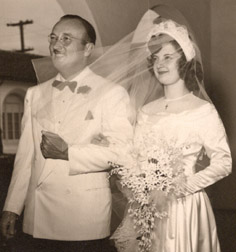 At left, Ivan gives away bride Beverly Flowers at her
wedding in 1949. (Beverly was not a relative.)
There was one fly in the ointment of his contentment. Marion’s health was precarious. Tuberculosis had
damaged her lungs, and a prolonged high fever had weakened her heart. One reason Ivan
drove himself to make money, above and beyond the characteristic fiscal urgency of a man who had grown up
dirt poor, was that medical bills for Marion’s care could build up suddenly and deeply. This is not to say
Marion was frail -- when at her best she appeared to others to be downright robust. In the early years of
Morning Glory she put in grueling workshifts. She took part in many of Ivan’s hiking excursions. Among her
accomplishments was becoming
the first woman ever to climb the north face of Mt. Hood volcano east of Portland, OR. Some family members
were not even aware of her compromised condition. Nevertheless, Ivan could never
be free of the worry that she might take a sharp turn for the worse.
Marion’s ill health was a key reason the marriage had not been blessed with children. Doctors had made it
clear that Marion was not strong enough to risk a pregnancy. This was an aspect of the union from the
beginning and Ivan accepted it. He never wavered from his devotion to her. That said, it is easy in
hindsight to see that by 1950, his childlessness was on his mind. He mentioned in more than one piece of
correspondence that he had become aware how doomed the Branson name was among his close kin. And indeed,
that very thing appeared to be happening. He had no offspring. His brother Walter had never married and
it was obvious he never would. His brother Jim, already dead by then, had fathered only a daughter,
Melba. Among the greater clan the prospect looked much the same. Three of his uncle Reuben’s sons had
sired no male heirs. His uncle Thomas’s sons were by then
all dead and none had become fathers. His uncle Joseph’s sons had -- so he thought -- produced only girls
or had no children at all. His uncle John’s sons had produced daughters, one stillborn son, and a lone
surviving son, Beverly Orwin Branson, but as of 1950 Beverly Branson’s family looked to be complete,
consisting of one daughter born in the early 1940s.
In fact, things were not quite so bleak. Reuben’s son Robert Lee Branson had fathered two sons who in turn
were becoming fathers of sons right at that mid-century point. Joseph’s son Eldridge had male heirs. Ivan
would later learn of these developments, but at the time he had not seen Robert Lee Branson since the day
this older cousin had by chance come into the telegraph office in Tonopah while Ivan was working there, and
Ivan had not seen Eldridge Branson since his boyhood in Mariposa County. Robert lived in extreme eastern
California in the Inyokern region, while Eldridge and his clan lived far to the south in San Bernardino.
Ivan was very much aware when Beverly Branson -- somewhat of a neighbor inasmuch as Bev lived in the San
Francisco peninsula town of Pacifica -- became a father of sons with his second wife during the 1950s. The
Branson name would persist after all. In the meantime, Ivan had been inspired, in part due to the urging
of his sister Maude, to consider family legacy. He accepted custody of the initial material gathered by
Maude during the 1940s, and began to try to complete the fact-gathering with an eye toward assembling a
formal, well-written, well-produced genealogy of the John Sevier Branson clan. Perhaps Ivan was worried
that no one after him would have the necessary motivation to complete a proper tribute, as if female-line
descendants could not trouble themselves to do so. In a sense, Marion’s ill health may well have been a
gift to the Branson clan. The gift eventually took the form of Ivan’s book, Bones of the Bransons.
 The irony is, Ivan would have natural heirs. He is not
to be faulted for thinking that at age fifty his turn at fatherhood had passed him by, but fate had other
things in mind for him.
Marion kept her grasp on life throughout the 1950s. These were good years. Morning Glory continued to
prosper. Ivan and his wife had enough money that he was able to begin to act upon his dreams of retirement.
He had never lost his affection for the gold country and had long planned to come back to it once his
twilight years were upon him. He chose a particularly lovely part of it, known to him from back in his
youth when his brother Jim had lived there -- the Grass Valley region east of
Sacramento, not far from Coloma, where gold had first been discovered at Sutter’s Mill. He purchased over
1700 acres near Rough & Ready and built a cabin, with the intention of erecting a large estate house, or
even a mansion, when the time came to move there permanently. In the meantime, he used the land partly as
a ranch, raising beef, eggs, and poultry to supply the Morning Glory employee commissary, where the number
of meals sometimes rose as high as four thousand served per day.
In 1961, Ivan and Marion visited Denmark. It was Marion’s first trip to her country of origin since before
she had married Ivan. Her only close blood relative, her nephew Donald Christensen, was a U.S. resident,
and given that Marion had been an orphan by age ten, she had no parents to see. However, she still
had cousins living near Randers and she enjoyed reconnecting with them. The excursion took place just in
time. Marion passed away of a heart attack 9 March 1962 at home at 380 Moncada Way, only a
matter of months after returning from Europe. In light of her health problems, it is remarkable she was
able to last as long as she did -- the better part of seventy years.
Ivan had lived a workaholic life and filled his time with myriad activities, but the loss of his spouse
made his existence feel empty. Into that void stepped a new acquaintance, a widow in her early forties
who had recently arrived in northern California. She was Signe Linnea Zettergren, daughter of Ernst
Vilhelm Zettergren and Signe Margareta Hellquist, a couple who had emigrated from Sweden and into the
United States during the 1910s. Known as Linnea in order to avoid being confused with her mother, she
was often known by the nickname Linn. She had been born 13 October 1920 in Chicago, IL. Growing up
mainly in Minnesota, at twenty-one years of age she had wed Russell William Baird (1917-1949) in Columbia
Heights, Anoka County, MN. This union had resulted in two children, the second born five months after a
case of polio claimed the life of Russell Baird. Linn and Ivan were wed 1 September 1962 at a small
ceremony in Stockton. They honeymooned at the cabin near Rough & Ready, and at Yosemite Valley, and then
at the Seattle World’s Fair. On the way home, passing through Redding, CA, Florence Branson (at that time
known as Florence Dumont) and many of her progeny got to meet the new Mrs. Ivan Branson.
And then the miracle. Ivan was sixty-one. His bride had already reached an age when most women are no
longer fertile. But in the summer of 1963, nine and a half months after the wedding, son Walter Thorpe
Branson was born. And slightly more than two years later, James Ivan Branson was added to the family.
Ivan, long reconciled to childlessness, was now a biological father of two, and stepfather (and adoptive
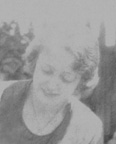
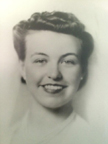
father) of two others. (The two wives of Ivan Branson are shown on either side of the following
paragraph. Marion Christian Branson is on the left as she looked in the early 1920s, already married to
Ivan. Signe Linnea Zettergren Branson is on the right as she looked in her twenties -- Ivan never knew her
at that age, but it seems appropriate to show both women at similar points in their lives.)
 What was to
have been a quiet phase of retirement in the foothills became a very active period indeed. In addition to
childrearing, Ivan as ever found all sorts of things to occupy himself with. He adeptly divested himself
of Morning Glory under good terms. The family made the full-time shift from San Francisco to Nevada County
in 1965. Ivan sold the house at 380 Moncada Way to a young couple who had been neighbors. They did not have
the means to qualify for a normal bank mortgage, so Ivan carried the note. (The couple were still in place
decades later when Ivan’s eldest son stopped by to see the place where he had
lived as a little boy. The woman recognized him and came out to express her gratitude, saying
that she and her husband probably never would have become homeowners in San Francisco if not for Ivan’s
magnanimous gesture.)
In Nevada County, Ivan put the finishing touches on his mansion, which he called Mariposa Manor. He ranched.
He hiked with the Alpine Club. He erected dams on his property, forming a quartet of small lakes, next to
which he created a huge picnic area suitable for the parking of numerous RVs and vacation trailers. This
lakeside expanse became the venue of frequent gatherings of the Shriners, a group he had joined in 1944 but
had been aware of and interested in since boyhood, when he saved a party of Shriners from death by
arranging a warning after noticing that the bed of the railroad track had washed out near the Exchequer
cabin, just before the chartered train of Shriner tourists was due to pass by on their way back from
visiting Yosemite Valley. Ivan also welcomed local school groups to his ranch, and helped the children
learn to identify native plants and wildlife. He organized Branson reunions, some of them featuring tours
of Mariposa County. And after having gathered genealogical data and notes and writing letters and
biographical sketches of family members for many years, he settled down to write the bulk of the material
that evolved into Bones of the Bransons. By this time his niece Melba Branson Sharp and her husband
were dwelling nearby, and they owned and operated a printing and graphic design business, Golden Sierra
Printing Company. With Melba able to handle production aspects, the long-anticipated project reached
fruition. The book was published in 1982.
Bones of the Bransons was not quite the comprehensive look at the whole family of John and Martha
Branson that Ivan had once planned. He had gathered a wealth of birthdates, birthplaces, etc., along with
biographical sketches contributed by a number of family members. He did so intending to do justice to the
whole gang, but in the end his time grew too short. In leaving it to Melba to oversee the final stages of
its creation, a great deal of the coverage of the modern-day family was omitted. Ivan was so disappointed
in this state of affairs that he refused to accept money for the finished work and gave away copies at
the publication party in Hornitos. The book in its final form was more of a memoir than a genealogy, a
paean to pioneer times and to the legacy of Bransons in history, and a portrait of John Sevier Branson
and his five sons. The text almost entirely ignored the five daughters of John and Martha and their
families and was lacking in specifics on many other descendants. However, it was full of anecdote and
color and Ivan’s characteristic humor (which could take on a ribald quality at times). All in all the
book was a remarkable achievement for a man who had passed his eightieth birthday. He was no doubt wise to
distribute the book even in its compromised form, because mortality caught up with him. Ivan held on long
enough to experience two more landmark moments -- he got to see his sons become married men. But
then he passed away at home 5 November 1984, succumbing to prostate cancer. This date was just shy of his
eighty-third birthday and the event came only two years after the publication of Bones. His body
was cremated, as Marion’s had been.
Linn Branson continued to live in Mariposa Manor for about twenty years. When real estate prices boomed in
the early 2000s, she sold the house, which was much too big for one person and which was too difficult for
an elderly woman to maintain. She downsized to a nearby smaller (but still more than ample) house a fraction
of a mile away in Penn Valley. Over the years of her widowhood she fielded many a query
from distant relatives who had read, or who had heard of, Bones of the Bransons, and who wanted to know
more about the family history. In 2005, I (Dave Smeds) visited Linn, who loaned me the huge trunk (actually
an ice chest) in which Ivan’s genealogical material was stored. That material gave me a huge jumpstart
into my own Branson-clan research, and without that boost, this website would not have come into being. I
will always be grateful for Linn’s generosity. Linn’s mother lived to be one day shy of ninety-two. Linn
out-did her, reaching ninety-three. She passed away peacefully in Penn Valley 10 March 2014.
By the time Ivan died, the Branson clan had long since become scattered far and wide. The family connections
had grown frayed and in some cases had dissolved. The early years of Ivan’s generation represented the last
stage when the group as a whole was tight-knit, most of that generation having been born and raised in either
Mariposa County or nearby in the town of Merced. If Ivan had not begun to collect genealogical data while the
majority of his siblings and first cousins were still alive and alert, it would have become extremely
difficult if not impossible to assemble a worthy archive later on. Thank you, Ivan. And thank you, Linn.
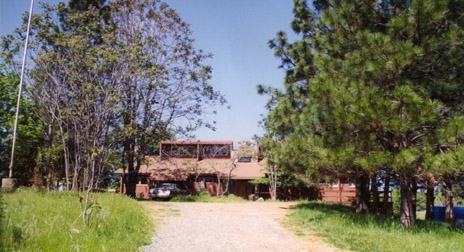
Mariposa Manor, Ivan’s home for the last two decades of his life.
Children of Ivan
Branson with Signe Linnea Branson
Walter Thorpe
Branson
James Ivan
Branson
For genealogical details, click on
each of the names.
To go back one generation, click here. To return
to the Branson/Ousley Family main page, click here.